There was a time when the sound that echoed through the Keuka Outlet ravine wasn’t the
rhythm of running shoes or the hum of bicycle tires.
It was the whistle of a locomotive.
And before that — the steady clop of mule hooves pulling canal boats through a narrow waterway carved nearly 10,000 years ago between Keuka and Seneca Lakes.
This corridor between Penn Yan and Dresden has always been about movement.
Only the method has changed.
Before the Trail — The Canal
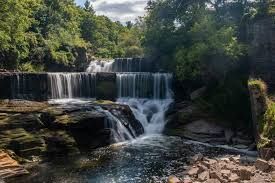
In 1833, the Crooked Lake Canal began connecting Keuka Lake (once called Crooked Lake) to Seneca Lake. Over eight miles, boats dropped 270 feet through the ravine created by the Keuka Outlet Creek. Seventeen locks controlled that descent, including the still-visible Lock #17 near Seneca Mills Falls.
The canal didn’t simply follow the creek — it ran beside it, separated by a towpath. That detail matters. Because today, when you walk the Outlet Trail, you are often traveling between the old canal bed and the creek itself.
The layers of history here are not metaphorical.
They are geological.
Steam on the Same Path
When canal travel declined, innovation didn’t abandon the route — it reinvented it.
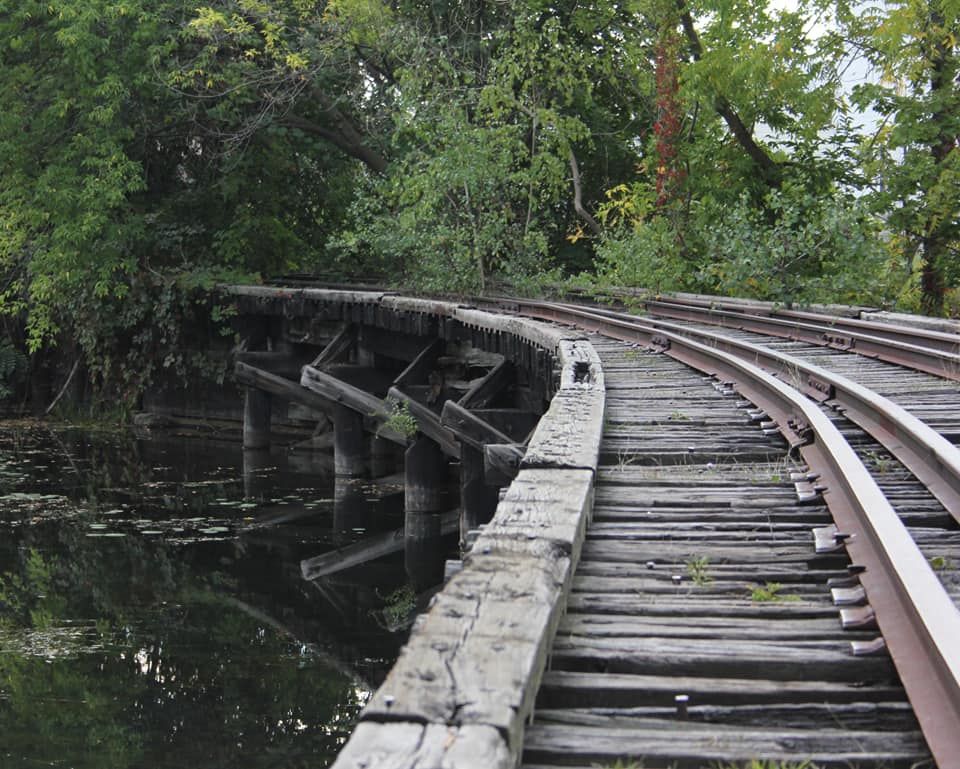
In 1884, the Fall Brook Railway laid tracks along that very towpath. The railroad operated until 1974, carrying freight, passengers, and possibility through the same ravine once navigated by canal boats.
Grapes from hillside vineyards traveled to larger markets.
Manufactured goods moved efficiently between lakes and beyond.
Villages expanded near depots, warehouses, and loading docks.
Transportation shaped settlement.
It dictated where businesses clustered and where homes were built. It tied lake communities to regional economies. It turned quiet villages into connected hubs.
And for nearly a century, iron rails replaced mule teams.
From Industry to Intention
When the railroad era faded, something remarkable happened here that did not happen everywhere.
The corridor was preserved.
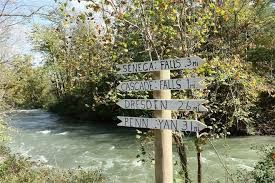
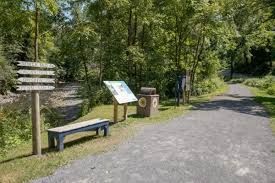
Today, the Keuka Outlet Trail stretches seven miles from Penn Yan to Dresden — one of the earliest rail-trails in the country. What was once a canal towpath became a railroad bed, and what was once a railroad bed is now a public pathway open year-round between sunrise and sunset.
The first 1.3 miles, from Elm Street (Rt. 54A) to Cherry Street in Penn Yan, are paved and managed by the Village. Beyond that, 5.7 miles of dirt, gravel, and historic ballast are lovingly maintained by Friends of the Outlet, Inc., a nonprofit dedicated to preserving the lands and waters of the Keuka Lake Outlet Preservation Area.
It is a partnership between past and present.
Movement Still Shapes Us
In the heart of New York State’s Finger Lakes, you can now:
Fish.
Hike.
Bike.
Horseback ride.
Snowmobile.
Cross-country ski.
Seven wooded miles that once carried cargo now carry conversation.
The descent from Keuka Lake to Seneca Lake is gradual, making the trail accessible in either direction. Families push strollers along the paved stretch. Cyclists glide over crushed stone. Snowmobilers follow winter’s quiet permission. Anglers cast into the same creek that powered mills and guided canal boats.
The corridor still moves people.
Only now, the journey is slower.
More intentional.
Lock #17 and the Echoes of Effort
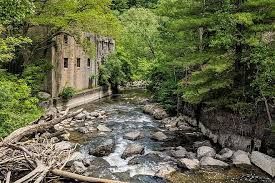
At Seneca Mills Falls, the trail briefly drops into the old canal bed and passes through Lock #17 — a tangible reminder that this landscape has always required engineering grit and human perseverance.
Stand there for a moment.
Imagine the drop of water levels.
The creak of wood gates.
The steam engine’s approach decades later.
Then open your eyes to moss-covered stone and rushing water.
The infrastructure changed.
The purpose evolved.
But the route endured.
Then & Now
In the railroad era, access meant expansion and commerce.
Today, access means recreation, wellness, heritage tourism, and community.
Businesses thrive near trailheads just as they once did near depots. Visitors choose Keuka not just for wine and water, but for walkability and wooded quiet. Families return season after season, building memories along the same corridor their ancestors once relied upon for livelihood.
Transportation still shapes settlement.
It still shapes identity.
A Trail That Carries Memory
The Keuka Outlet Trail is more than a path between two lakes.
It is a timeline you can walk.
Canal.
Railroad.
Recreation.
Nearly two centuries of ingenuity layered onto a ravine formed thousands of years ago by glacial retreat.
Every footstep rests on ballast that once held iron rails. Every tire turn traces a line drawn by engineers in the 1800s. Every cast of a fishing line honors the waters that powered mills and industry.
The tracks shaped us.
The trails sustain us.
And both remind us that movement — in every era — builds community.
Next time you head out between Penn Yan and Dresden, pause.
You are not just on a trail.
You are walking through the story of how Keuka learned to move forward — without forgetting where it has been.
Stay Rooted.
Stay Keuka. 🌿
Get Involved!
The Friends of the Outlet, Inc. preserve and care for the Outlet Trail, the creek, surrounding lands, and historic structures through memberships, donations, grants, and dedicated volunteers.
If you’re not already a member, consider joining — or reach out to learn other ways you can help protect this treasured corridor.
Friends of the Outlet, Inc.
PO Box 125
Penn Yan, NY 14527
Website