There must have been moments when the people of Hammondsport simply stopped what they were doing and looked up.
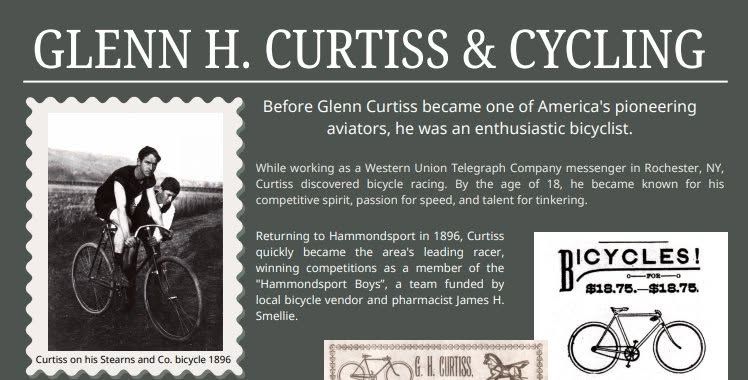
Not so many years before, they had watched a skinny, mechanically curious young Glenn Curtiss race bicycles through the village streets.
They had heard the sputter of his first engines.
They had watched motorcycles roar out of his shop.
And then they watched those engines leave the ground.
But what happened next would connect this little village at the southern end of Keuka Lake to something much bigger than anyone could have imagined.
The United States Navy came to Hammondsport.
And some of the men who would help build American naval aviation came here to learn from Glenn Curtiss.
FROM EXPERIMENT TO SOMETHING BIGGER
By the opening years of the 20th century, aviation was moving at a breathtaking pace.
What had begun as experimentation was becoming something else entirely.
An industry.
A competition.
And increasingly, a matter of national defense.
The United States Navy was paying attention.
If an airplane could fly over land, military leaders began asking an entirely new set of questions.
Could an airplane operate with ships?
Could it take off from the water?
Could it land there?
Could pilots fly from places where there were no runways at all?
These were enormous questions in an era when simply getting an airplane safely into the sky was still an accomplishment.
And Glenn Curtiss loved questions like these.
Give Glenn a problem and he wanted to solve it.
Hammondsport—and Keuka Lake—gave him a remarkable place to try.
WHY HAMMONDSPORT?
Look at Keuka Lake today and it is easy to see beauty.
The hills.
The vineyards.
The villages tucked along the shoreline.
But Glenn Curtiss saw something else, too.
Possibility.
There was land around Hammondsport for testing and training.
There were workshops where machines could be built, repaired, altered and built again.
And there was that long stretch of open water—a natural place to experiment with the increasingly important question of whether airplanes and water could work together.
Then, of course, there was Curtiss himself.
Mechanic.
Engine builder.
Pilot.
Inventor.
And a man who seemed to understand instinctively that aviation would advance only if someone was willing to try what had never been tried before.
Hammondsport was becoming a working laboratory of flight.
And soon, some very important visitors began arriving.
THE NAVY SENDS A PILOT
One of the most important was
Theodore Gordon “Spuds” Ellyson.
In 1911, the United States Navy ordered Ellyson to receive aviation instruction from Glenn Curtiss.
Think about that for a moment.
The Navy was entering an entirely new world.
There was no long-established naval flight school.
No generations of Navy pilots waiting to teach the next class.
No century of procedures and traditions.
Someone had to be first.
Ellyson became Naval Aviator No. 1.
And Glenn Curtiss became one of the men who taught him.
Their work together began with Curtiss's operations in California and continued back east as the Navy and Curtiss pushed deeper into the possibilities of military aviation.
And Ellyson wouldn't be the only one.
THE FIRST NAVAL AVIATORS
Soon two more names became part of the story.
John Rodgers became Naval Aviator No. 2.
John Henry Towers became Naval Aviator No. 3.
Towers would eventually rise to the rank of admiral and become one of the most influential figures in the history of United States naval aviation.
But before the admirals, commands and history books, there was training.
There were fragile airplanes.
Engines that didn't always cooperate.
Winds that had to be understood.
Machines that still had something to prove.
And men willing to climb into them anyway.
Ellyson.
Rodgers.
Towers.
Together, they belonged to a tiny fraternity that had never existed before.
America's first naval aviators.
They were learning something for which there was hardly a roadmap.
And Curtiss was helping them write it.
KINGSLEY FLATS
For those of us who know Hammondsport today, this is where the story becomes especially wonderful.
Because this history wasn't happening at some enormous military installation hidden behind gates.
It was happening
here.
The area known as
Kingsley Flats, near Hammondsport, became associated with Curtiss flight testing and training.
Imagine standing nearby in those early years.
There were no modern airports.
No control towers.
No paved runways lined with lights.
No radios connecting pilot and ground crew.
There was grass.
There was wind.
There were mechanics.
There were experimental machines made from wood, wire, fabric and engines that men like Curtiss were still learning to master.
And there were people willing to climb into them.
I can't help but wonder what the people of Hammondsport thought.
Did farmers stop working when an airplane passed overhead?
Did shopkeepers step outside when they heard an engine?
Did children run toward the sound?
Maybe by then Hammondsport had learned something:
When Glenn Curtiss was involved, it was probably worth looking up.
KEUKA LAKE BECOMES PART OF THE EXPERIMENT
And then there was the lake.
Curtiss understood that water offered possibilities aviation on land alone could not.
America had long coastlines and a Navy built around ships. If airplanes were going to become useful at sea, they needed to go where ordinary runways couldn't.
That meant solving an entirely new collection of problems.
Floats.
Hull designs.
Balance.
Engines.
Takeoffs.
Landings.
Wind.
Waves.
Every success answered one question and seemed to create three more.
And Keuka Lake became one of the places where those questions could be explored.
The same lake that had carried steamboats and reflected vineyards along its hillsides was now witnessing something entirely new.
Aircraft were learning to use water as their runway.
MORE THAN AN INSTRUCTOR
Curtiss's relationship with these early Navy aviators was about much more than teaching a man how to move the controls of an airplane.
He was an inventor working beside pilots who were discovering what they needed from the machines.
Pilot and mechanic.
Military officer and civilian inventor.
Problem and solution.
They were figuring it out together.
And that may be one of the most important things to understand about Glenn Curtiss.
He didn't simply build an airplane, hand over the keys and walk away.
He watched.
He listened.
He experimented.
Something didn't work?
Change it.
Something broke?
Fix it.
Something almost worked?
Try again.
That curious Hammondsport boy who had once taken things apart simply because he needed to understand them was now applying that same instinct to one of the biggest challenges of his lifetime:
How do you make an airplane useful to a Navy?
FROM A CROOKED LAKE TO THE OPEN SEA
This is the part of the story that gets me.
Go back only a couple of decades.
Glenn is a boy working among his grandmother Ruth's vineyards.
Then he is riding bicycles.
Racing with the Hammondsport Boys.
Working around James Smellie's bicycle shop.
Building his own bicycles.
Building engines.
Racing motorcycles.
Building airplanes.
And now?
United States Navy officers are learning to fly with Glenn Curtiss.
Theodore Ellyson.
John Rodgers.
John Towers.
Men who would become part of the foundation of American naval aviation were stepping into machines that were still experimental, trusting the mechanics who built them, trusting Curtiss—and trusting themselves enough to climb aboard and try.
And some of that remarkable story was unfolding right here around Hammondsport.
The village hadn't moved.
Keuka Lake hadn't moved.
But suddenly the world had found them.
I love thinking about that.
A crooked little lake surrounded by vineyards and hills becoming part of a story that would eventually stretch across the world's oceans.
Because eventually naval aircraft would become faster, stronger and almost unimaginably more sophisticated.
Aircraft carriers would become floating airfields.
Naval aviators would cross oceans.
Flight would become an essential part of the United States Navy.
But before all of that came the experiments.
The mistakes.
The repairs.
The lessons.
And the courage to climb aboard and try again.
There must have been someone standing near Kingsley Flats or along the shore of Keuka Lake one day, shielding their eyes from the sun as one of those early machines climbed higher and higher above Hammondsport.
Perhaps they stopped whatever they were doing.
Perhaps they called someone else outside.
Perhaps a child pointed toward the sky.
Or maybe by then they weren't surprised at all.
After all...
this was Hammondsport.
And when Glenn Curtiss was around, people had learned to look up.
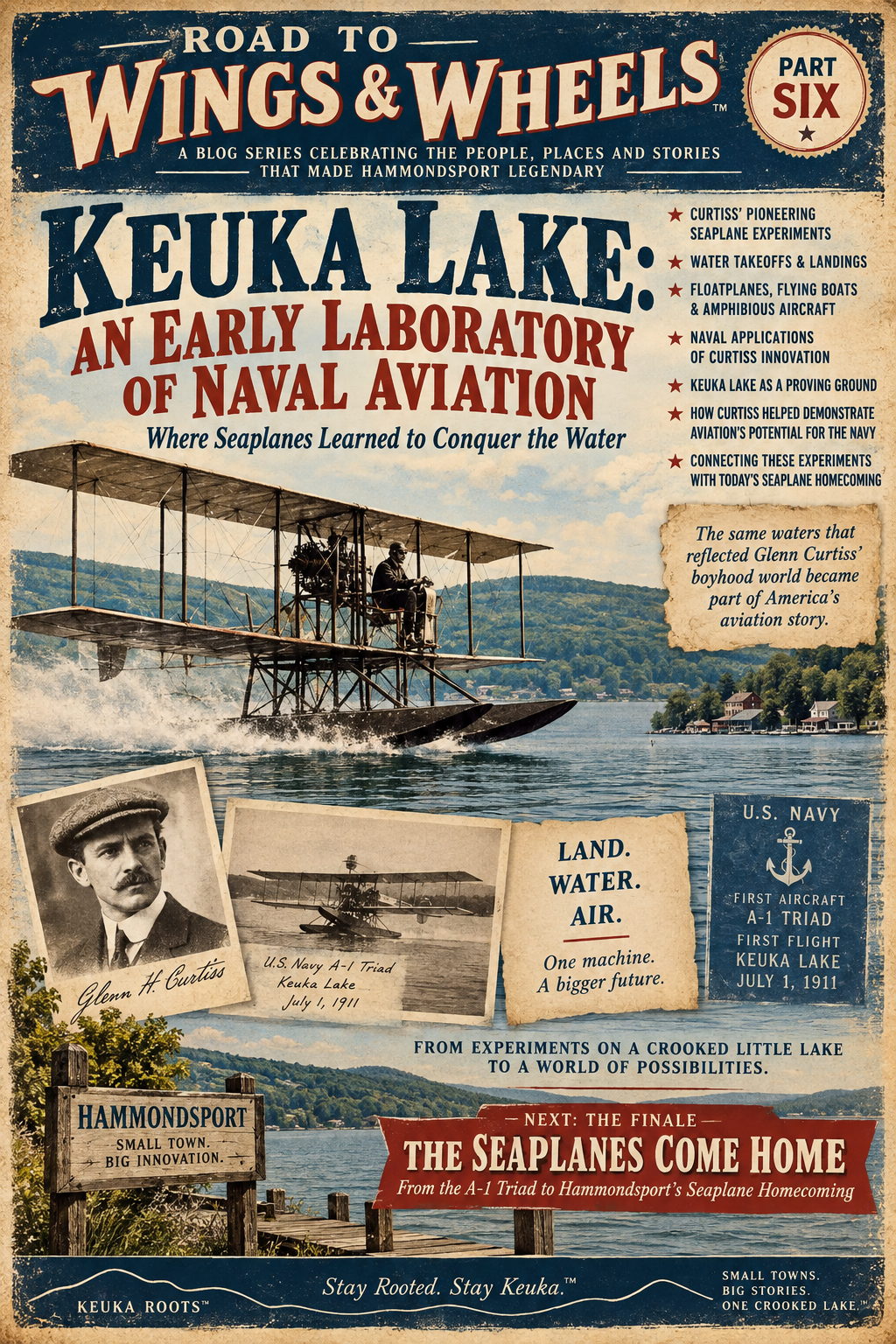
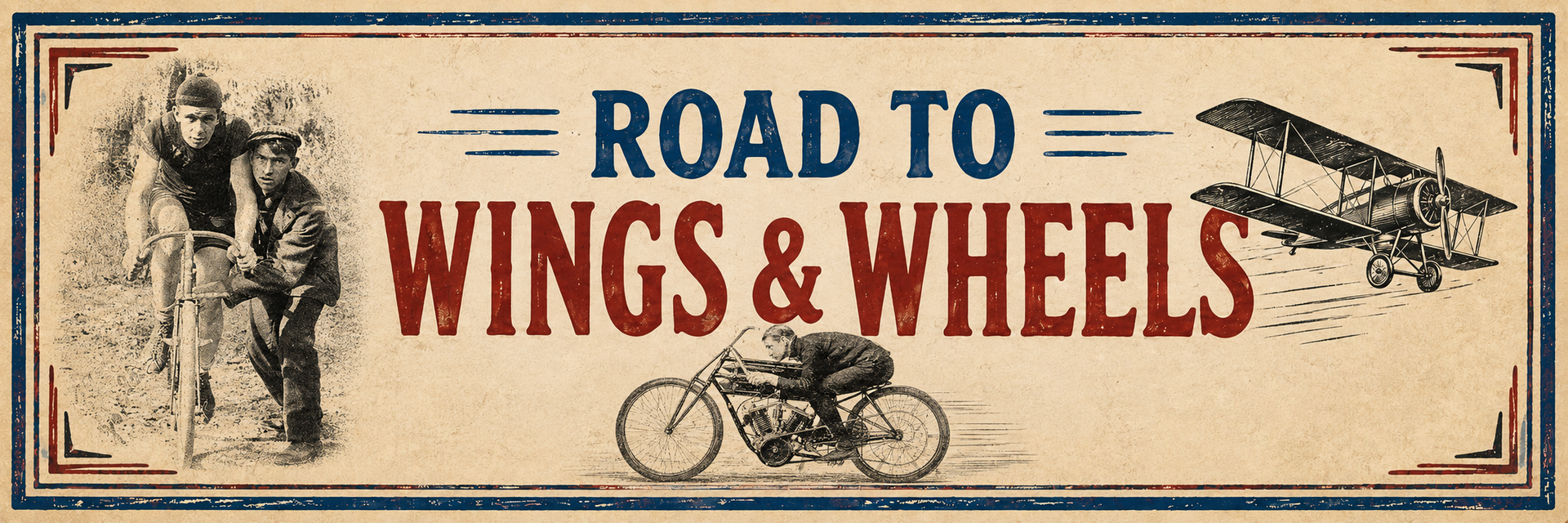
NEXT ON THE ROAD TO WINGS & WHEELS
The Navy had come to Glenn Curtiss to learn to fly.
Now Glenn would tackle an even greater challenge:
teaching airplanes to conquer the water.
In
Part Six of Road to Wings & Wheels, we'll return to Keuka Lake for:
KEUKA LAKE: AN EARLY LABORATORY OF NAVAL AVIATION
Where Seaplanes Learned to Conquer the Water
🏁 THE ROAD LEADS TO HAMMONDSPORT
Every story in our
Road to Wings & Wheels series leads us back to the place where so much of it began—Hammondsport, New York, home of
Glenn H. Curtiss.
Now it’s your turn to become part of the story.
✈️ 🏍️ 🚗 WINGS & WHEELS 2026
Saturday, September 19 | 10 AM–4 PM
Hammondsport, New York
Registration is still open for participants! Bring your
seaplane, classic or special-interest car, or motorcycle and join us for a day celebrating the machines, innovation, speed, and spirit that helped put Hammondsport on the map.
Have a ride worth showing off? Enter it today and become part of Wings & Wheels!
Participant information and registration are available through the
Glenn H. Curtiss Museum.
And for everyone coming to watch, explore, photograph, reminisce, and enjoy the day—admission is FREE!
So mark your calendar, bring the family, and meet us in Hammondsport as we celebrate the remarkable legacy of Glenn Curtiss and the enduring love of
wings, wheels, and everything that moves us.
See you at Wings & Wheels!
Stay Rooted. Stay Keuka.™
Small Towns. Big Stories. One Crooked Lake.™
Join us on FB!