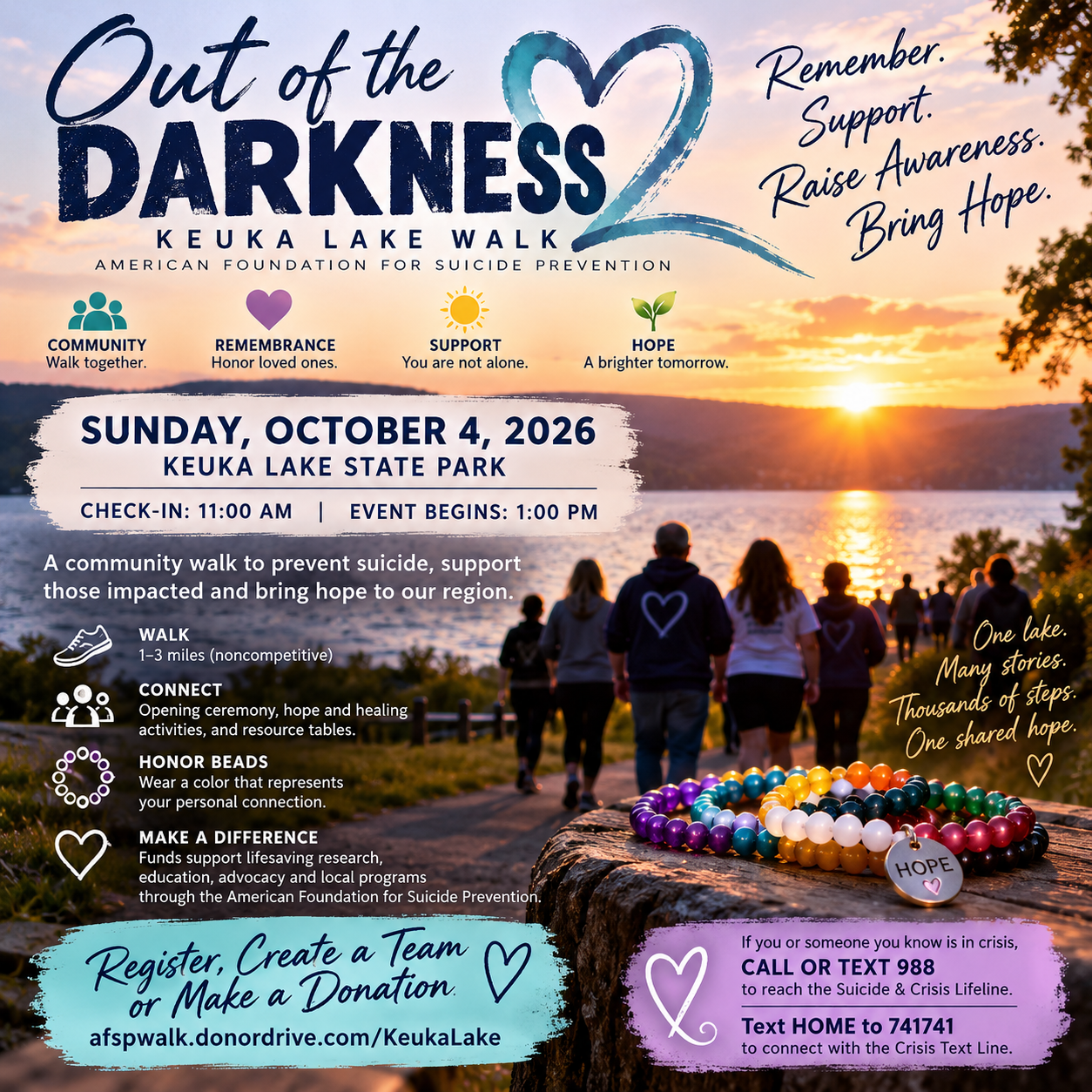
This isn't a topic I normally cover here at
Keuka Roots.
Most days, you'll find me writing about the remarkable people, places, history, and hidden stories that make life around our crooked lake so special. But every now and then, something comes along that feels too important not to share.
A couple of days ago, I received a phone call from a dear friend. Her husband has been hospitalized after becoming seriously ill from
babesiosis, a disease caused by a microscopic parasite transmitted through the bite of an infected deer tick.
Like many people, I had heard of Lyme disease, but I knew very little about babesiosis. The more I researched, the more I realized how serious—and in some cases life-threatening—this illness can become, particularly for older adults and those with weakened immune systems.
Living in the beautiful Finger Lakes means we spend our days enjoying wooded trails, vineyards, gardens, lakeshores, and the great outdoors. It's one of the many blessings of calling this region home. But it also means sharing that landscape with blacklegged ticks, making awareness and prevention more important than ever.
So today, instead of sharing a story from our past, I'd like to share one that could help protect our future. If this article encourages even one person to check for ticks after a walk in the woods, recognize the symptoms sooner, or seek medical care when something doesn't feel right, then it's a story worth telling.
Understanding Babesiosis and Why the Smallest Creatures Around Keuka Matter
There is something magical about wandering the woods that surround Keuka Lake.
The towering maples. Fern-lined trails. The scent of pine after a summer rain. Deer quietly slipping through the trees. Songbirds calling overhead.
But hidden among the grasses and fallen leaves is one of the smallest creatures in our region—and one that deserves our respect.
The blacklegged tick, commonly called the deer tick.
While most people have heard of Lyme disease, another tick-borne illness is becoming increasingly common throughout New York State, including the Finger Lakes:
babesiosis.
And surprisingly, one of the biggest players in its story isn't the deer at all.
It's the humble white-footed mouse.
Meet Babesia: A Tiny Parasite with Big Consequences
Babesiosis is caused by microscopic parasites of the genus Babesia. In the United States, the species responsible for most infections is Babesia microti.
Unlike bacteria or viruses, Babesia is a single-celled parasite that invades your red blood cells. Once inside, it multiplies until the cells rupture, which can lead to anemia and a range of symptoms that vary from mild to life-threatening.
Many healthy people never realize they've been infected.
Others experience:
- Fever
- Chills
- Night sweats
- Extreme fatigue
- Muscle and joint aches
- Headaches
- Loss of appetite
- Nausea
In severe cases, especially among older adults, people without a spleen, or those with weakened immune systems, babesiosis can cause significant anemia, breathing problems, kidney complications, and may require hospitalization.
Fortunately, effective treatments are available when diagnosed early.
Why They're Called Deer Ticks—But Deer Aren't the Whole Story
The name "deer tick" has led many people to believe deer are responsible for spreading Lyme disease and babesiosis.
The truth is a little more complicated.
Adult blacklegged ticks often feed on white-tailed deer. Deer provide an excellent place for adult ticks to feed, mate, and reproduce, helping maintain large tick populations.
But deer are
not the primary source of the organisms that cause Lyme disease or babesiosis.
The real heroes—or villains, depending on your perspective—are much smaller.
The Mouse Connection
The white-footed mouse plays an incredibly important role in the tick's life cycle.
When deer tick eggs hatch, they emerge as tiny six-legged larvae—so small they can be difficult to spot.
Those larvae need their first blood meal.
Very often, that meal comes from a white-footed mouse.
If the mouse is carrying Babesia microti or the bacteria that causes Lyme disease, the young tick becomes infected while feeding.
The tick then molts into its next stage—a nymph.
Now carrying the parasite, that nymph may later bite another animal…or a person.
In fact, many human infections occur from
nymph-stage ticks, which are about
the size of a poppy seed
and incredibly easy to overlook.
It's More Than One Disease
One reason tick bites can be especially concerning is that a single deer tick may carry more than one pathogen.
The same bite can potentially transmit:
- Lyme disease
- Babesiosis
- Anaplasmosis
This is known as a co-infection, and it can make diagnosis more challenging while causing more severe illness.
If you've had a tick bite followed by fever, chills, unusual fatigue, or flu-like symptoms—especially during spring, summer, or early fall—it's important to let your healthcare provider know.
Living Along the Crooked Lake
Life around Keuka Lake naturally brings us close to the habitats ticks love.
Stone walls.
Woodpiles.
Brushy edges.
Forest trails.
Tall grass.
Even beautifully landscaped gardens bordering wooded areas.
That doesn't mean we should stop enjoying the outdoors.
It simply means being a little more aware.
Simple habits can greatly reduce your risk:
- Wear long sleeves and long pants when hiking.
- Use EPA-approved tick repellents.
- Stay toward the center of trails.
- Perform a thorough tick check after spending time outdoors.
- Shower soon after coming inside.
- Remove leaf litter and brush around your home.
- Stack firewood neatly to discourage mice from nesting nearby.
- Seal small openings where mice may enter sheds or homes.
These small steps help protect not only you but also your family and pets.
Small Creatures. Big Lessons.
Nature has an incredible way of reminding us that size doesn't always determine significance.
A tiny parasite living inside a red blood cell.
A tick no larger than a poppy seed.
A little white-footed mouse scurrying through the forest floor.
Together they form one of the most fascinating—and important—ecological stories unfolding across the Finger Lakes today.
The next time you head out to enjoy our beautiful woods, vineyards, or shoreline trails, don't let fear keep you indoors.
Instead, let knowledge be your companion.
A quick tick check at the end of the day may be one of the simplest acts of caring for yourself and those you love.
Because staying rooted also means staying informed.
Disclaimer: This article is intended for educational and informational purposes only and should not be considered medical advice. While every effort has been made to provide accurate and up-to-date information, tick-borne illnesses can present differently from person to person. If you have been bitten by a tick or are experiencing symptoms such as fever, chills, fatigue, muscle aches, or other unexplained illness, please consult your healthcare provider promptly for evaluation, diagnosis, and treatment. Always seek the advice of a qualified medical professional regarding any questions or concerns about your health.
Stay Rooted. Stay Keuka.