There was a time — not so very long ago — when winter in Penn Yan meant more than snowbanks and stovepipes smoking against gray skies.
It meant elephants.
Not once a year behind parade ropes.
Not for an afternoon under a striped tent.
But for months.
Because for roughly three decades in the mid-1900s, one of America’s last true traveling family circuses didn’t just visit our valley…
It lived here.
A showman named Jimmy Cole
James M. “Jimmy” Cole was born into the world of traveling entertainment in the early 1900s, in an era when circuses moved by rail and entire towns turned out for parade day. He learned every job the hard way — caring for animals, loading wagons, rigging tents, repairing equipment — long before he ever became an owner.
In 1938, during the waning years of the Depression, he did something unusual. Instead of building a massive spectacle like the fading giants of the era, he created a smaller, resilient show — one that could travel town to town and survive changing times.
It began in school gyms and community halls.
Within a few seasons, it had canvas, wagons, performers, and a name:
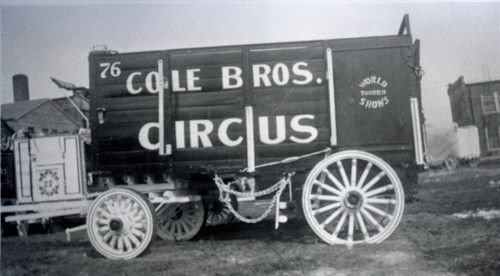
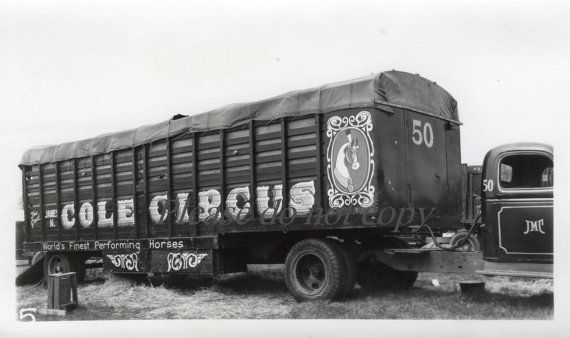
The James M. Cole Circus.
By about 1940, Cole chose Penn Yan as the winter quarters for his show. And from then on, every fall the circus quietly returned — not to perform, but to live.
When the circus came home
Each year, as cold settled over the Finger Lakes, rail cars and trucks arrived and dispersed into barns and storage buildings around the countryside.
No music.
No parade.
Just a different kind of everyday life.
Farmers sold hay.
Mechanics repaired engines.
Blacksmithing, painting, and rebuilding filled the off-season months while performers practiced indoors and animals were exercised outdoors.
And sometimes — especially on clear winter days — residents might glance down a rural road and see something they never expected in Yates County:
An elephant walking through the snow.
The elephant years
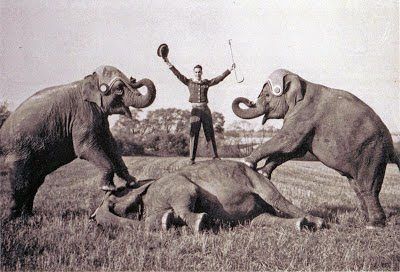
In 1946 the circus acquired its first elephant, remembered by many as Frieda. From then on, elephants became the heart of the show and the symbol of its winters here.
Jimmy Cole was not a distant owner.
He was an elephant trainer — working beside the animals daily, raising some from youth, and becoming widely known for the calm familiarity he had with them.
Sometimes local children were granted rare visits — a parent who knew a mechanic, a farmer who supplied hay, a quiet favor exchanged the way small towns have always worked.
For those children, the first elephant they ever saw wasn’t at a zoo or under the bright lights of a big-city performance.
It was behind a barn in Penn Yan.
When I was young, my own father worked as a local mechanic, repairing the trucks for the Cole Circus during their winter stay. Every now and then he would bundle me into my coat and simply say he had a surprise. I never needed more explanation — I knew we were going somewhere special.
We’d arrive at those barns, cold air hanging in clouds around us, and there they were… enormous and gentle all at once. I can still remember the sound of hay rustling beneath their feet, the warmth of their breath in the winter air, and the feeling that somehow our ordinary little town had turned into something out of a storybook.
To a child, it didn’t feel unusual or historic.
It just felt like magic..
Circus Land — when the public could visit
In the late 1950s, for a brief and magical period, Cole opened part of the winter quarters to visitors in what became known as Cole’s Circus Land.
Families could drive out and see what had previously been hidden winter work:
• elephants up close
• wagons and parade equipment
• training sessions
• performers practicing
• the daily life of circus families
It wasn’t a staged midway.
It was simply the circus — paused between seasons — allowing the community to step inside its world.
The attraction lasted only a short time, around 1957–1958, but its memory endured far longer than many permanent attractions ever did.
Spring departures
Every April the quiet transformation reversed.
Wagons were loaded.
Animals boarded.
Rail cars coupled.
Then the train and trucks left.
And just like that, Penn Yan returned to an ordinary village — leaving behind muddy tracks in thawing ground and children trying to explain to classmates elsewhere that yes, they really did have elephants in winter.
The end of the era
By the 1970s, changing regulations, rising costs, and the decline of railroad circuses ended the age of shows wintering in small towns. The James M. Cole Circus continued in smaller form, but the long Penn Yan winters came to a close.
Jimmy Cole died on Dec.19,1992 in Sarasota, FL. leaving behind more than a circus.
He left a rare chapter of local history — a time when spectacle and small-town life overlapped so completely they became the same story.
A Keuka Roots Closing Thought
Who else remembers Jimmy Cole and his circus? Who stood wide-eyed at a fence line, marveling at the elephants when they came home to Penn Yan for the winter?
If you or your family have a story, a photograph, or even just a childhood memory, I would love to hear it. These are the threads that keep our small-town history alive — shared, remembered, and passed along like all good stories should be.
Stay Rooted. Stay Keuka.