Today we drive around Keuka Lake in under half an hour, windows down, admiring the view.
But for most of the 19th century, the view wasn’t scenery.
It was the road.
Long before Route 54 traced the shoreline, the hills surrounding Keuka were steep, muddy, and often impassable. A wagon trip between Hammondsport and Penn Yan could take most of a day — longer in winter and sometimes impossible in spring thaw.
So the people of the Crooked Lake did what practical people always do:
They used the lake itself.
The Era of Steamboats (1830s–early 1900s)
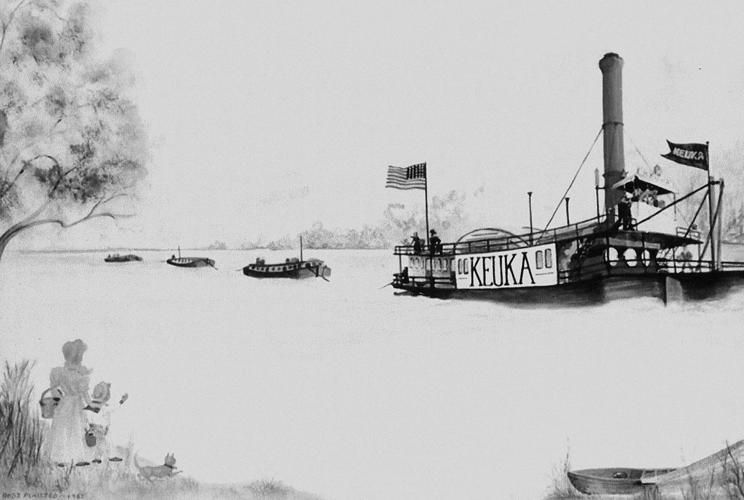
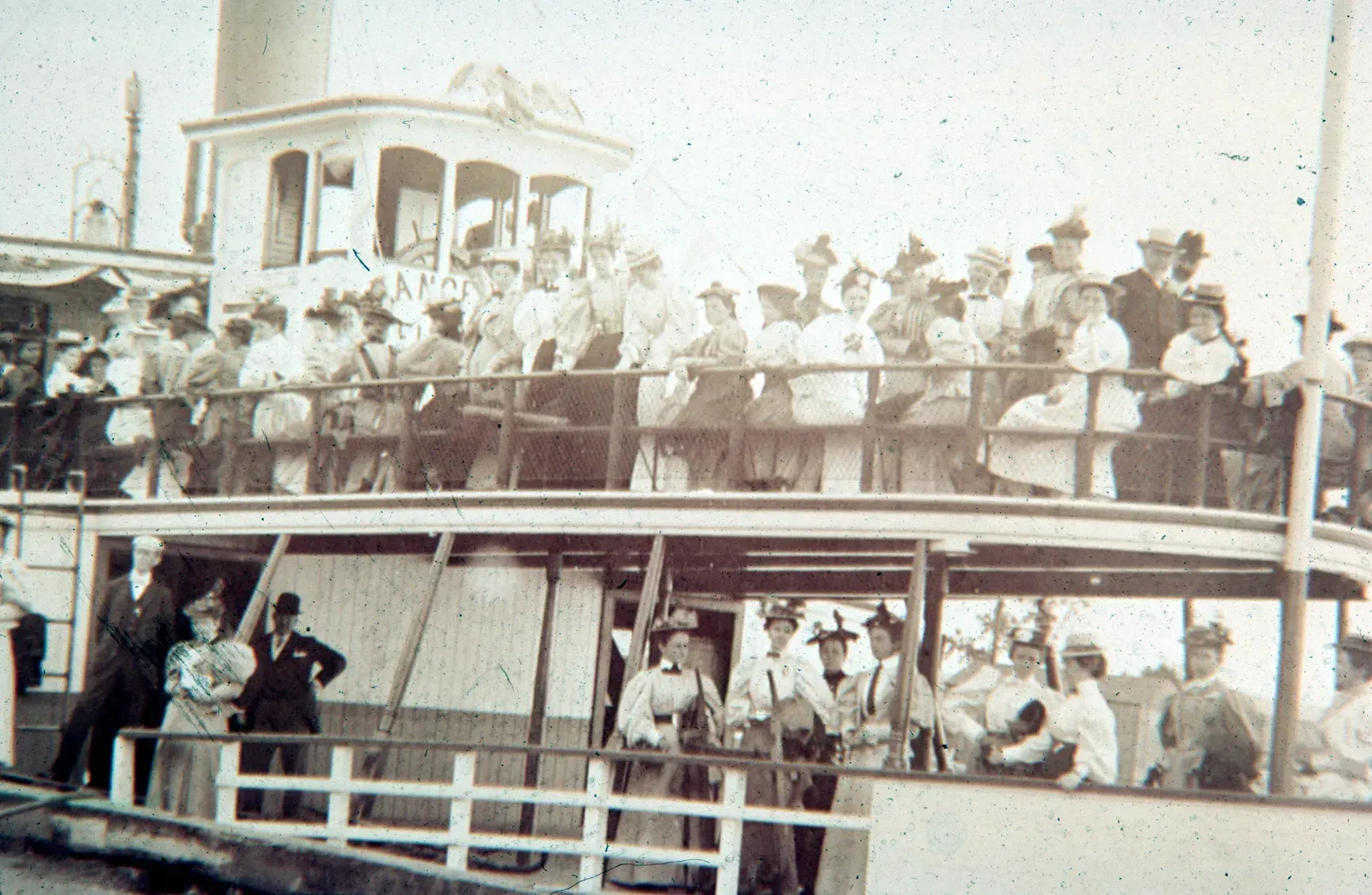
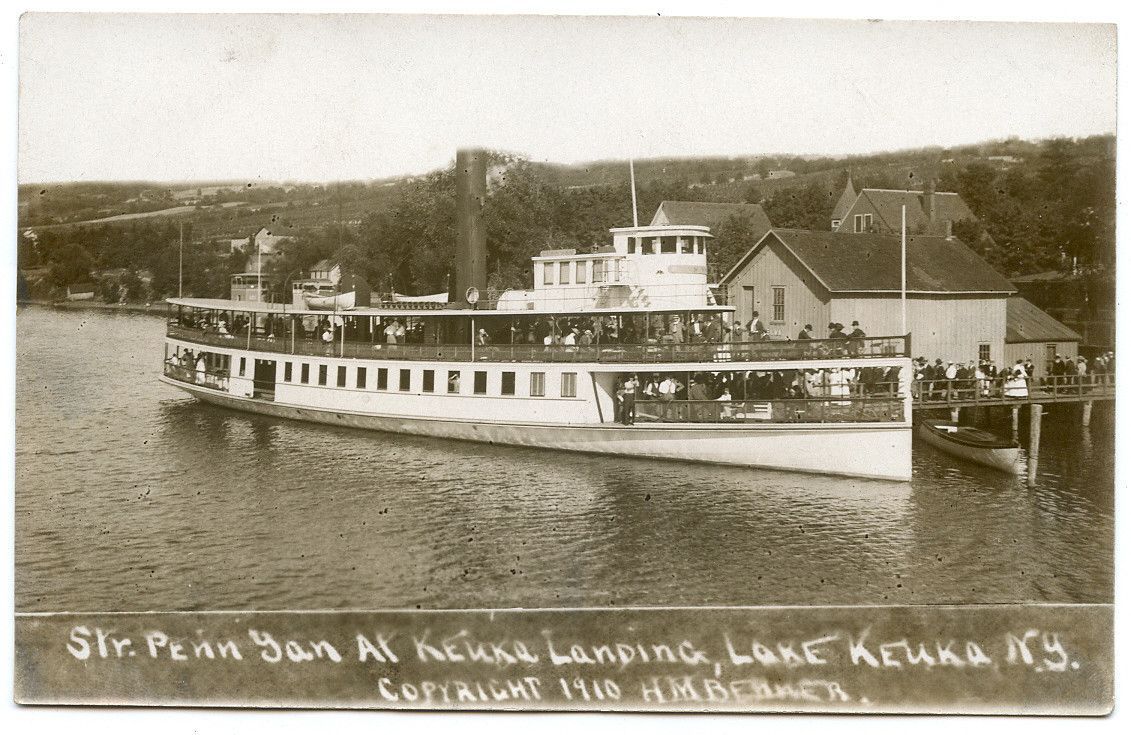
By the mid-1800s, Keuka Lake had regular scheduled passenger and freight steamboat service running daily between Hammondsport at the south end and Penn Yan at the north.
Overland travel meant:
- muddy wagon roads
- steep hills
- impassable winter stretches
- a trip that could consume an entire day
The steamer?
Two to three hours. Comfortable. Predictable. Reliable.
The whistle became the region’s clock. People set their schedules around it.
Morning departure from Hammondsport.
Stops at Bluff Point, Branchport, and small landings.
Arrival in Penn Yan near midday.
Return trip in the afternoon.
In many ways, it functioned exactly like a modern commuter bus route — except the bus carried the entire economy with it.
Not Just Passengers — The Supply Chain
These boats were never simply ferries.
They were floating lifelines.
From Hammondsport north to Penn Yan
- grapes and early wine barrels
- farm produce
- lumber
- coal from rail connections
From Penn Yan south
- manufactured goods
- mail
- visitors
- hotel guests heading to lakeside resorts
If you were shipping wine in the 1800s, it almost certainly touched a Keuka steamer first.
Business, news, and community all traveled together. Deals were made on deck. Letters changed hands mid-journey. Travelers often arrived already introduced to half the village they were about to visit.
Before the Steamers (Early 1800s)
Before engines, travel still happened — just slower and harder.
Early settlers crossed using:
- sailboats
- rowed freight scows
- barges pulled along shore
- winter sled routes across the frozen lake
Yes — in cold winters people literally crossed Keuka on the ice.
The lake has always been the path. Steam simply made it dependable.
The Beginning of the End (Late 1800s–Early 1900s)
Then the outside world arrived.
Railroads connected Hammondsport to regional markets.
Penn Yan linked into broader trade networks.
Roads gradually improved.
The steamer’s role changed.
Transportation became excursion.
Commuters became tourists.
Working boats became pleasure boats.
By the 1920s, the era of Keuka as a working water highway was essentially over.
The Big Picture
For most of the 19th century:
Keuka Lake wasn’t scenery — it was infrastructure.
Without those boats:
- Hammondsport likely never becomes a wine center
- Penn Yan never grows into a trade hub
- the villages develop separately
Instead, the lake stitched them together into a shared economy and shared identity — a relationship that still shapes the region today.
Even now, when you stand at either end of the water, you’re looking at more than a lake.
You’re looking at the road that built community.
Because around Keuka, the water never divided us — it introduced us.
Stay Rooted. Stay Keuka.